Fiction · 7 min read
Last Call at Voltage
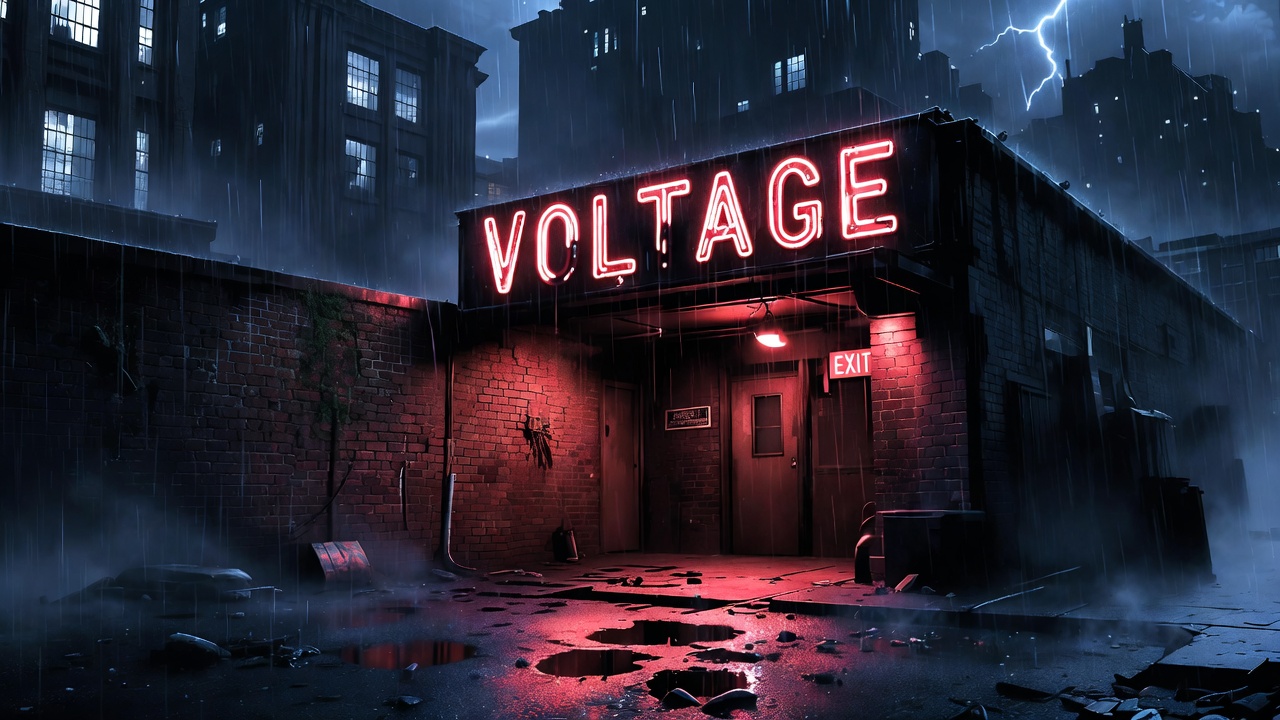
Voltage lived two floors under a shuttered textile warehouse off Saint-Laurent. You got in through a steel door with no sign and down a concrete staircase that smelled of rain and fog juice. Below were bare walls, one red bulb over the booth and a sound system built by someone who hated eardrums. On a good night three hundred bodies moved to dark techno and industrial loud enough to shake the fillings in your teeth.
Tonight wasn't a good night. Maybe sixty people, a DJ grinding through slow, heavy 125 BPM, and a back bar behind a curtain where the bass softened to a heartbeat in the floor.
He took the end stool in the back bar, the one with a view of the curtain and the cash box in the cracked mirror. It was an old habit, and he'd stopped apologizing to himself for it years ago.
"Glenfarclas," he said. "The twenty-five, if Nadia still hides it under the ice bin."
The woman behind the bar had shaved sides, ink up both forearms and eyes like an auditor's. "Nadia's the owner. She's me. And yes, I still hide it." She poured two fingers without asking how much, which told him she'd been doing this a long time.
He let the first sip sit. Sherry, leather, a little smoke at the end, like an argument that settles itself before anyone raises their voice. One drink, he'd promised himself. One drink, then home to the unfinished work waiting on his laptop.
That promise lasted about four minutes.
The man who came through the curtain at 1:40 wore a camel coat in a room full of black, which was a statement in itself. He didn't sit. He leaned on the bar beside the cash box, close enough that Nadia had to step back.
"Thursday," he said over the bass.
"I told you Thursday was fine."
"Thursday was fine last week. This week it's Wednesday." He smiled the way people smile at dogs they plan to sell. "Interest compounds, Nadia. That's not me. That's arithmetic."
He set a small black notebook on the bar and flipped it open with one finger, then ran it down a column of figures and tapped the bottom.
From the end stool, in the cracked mirror, the man with the whiskey read the page backward. It took him about as long as it takes most people to read a drink list.
Eleven entries. A weekly rate dressed up as monthly. A principal that never went down, no matter what she paid. And a total at the bottom that was wrong.
Not wrong in her favour.
He took another sip and kept his face as flat as the bar top.
When the camel coat had pushed back through the curtain, Nadia stood with both hands on the bar and stared at nothing. Through the wall the DJ dropped into something slower and meaner, a kick drum like a door being forced.
"How much did you borrow?" he asked.
She looked ready to tell him to mind his own business, then saw he wasn't the type who'd go away for that. "Eighteen thousand. Two years ago. The sound system blew, then the fire inspector, then the landlord wanted six months up front."
"And you've paid him?"
"Thirty-one." She laughed without any humour in it. "And I still owe twenty-six, apparently."
"You don't," he said. "You owe about nine, by his own terms. He's charging you weekly interest on a monthly rate, and he's been carrying the same late fee forward every week since March. It gets added to the principal and then charged interest again. I watched him do the sum. He rounds up twice."
She stared at him. "You read that from there?"
"Mirror's good for something." He turned the glass slowly on the bar. "He's not just greedy. He's sloppy. Sloppy is useful."
He'd spent his life being the person people called when the thing everyone said couldn't break had broken. Servers, budgets, contracts, once a hospital's entire backup system at 3 AM. The tools changed, but the job never did: find the one number that doesn't fit, then pull on it until the whole lie comes loose.
"Who does he work for?" he asked.
"Nobody. That's his pitch. Independent. Friendly rates for the scene." She poured herself a coffee she clearly didn't want. "He's got maybe forty of us. Promoters, two other clubs, a record shop, a guy who rents out PA gear."
Forty clients. A notebook, not a laptop. A man who rounds up twice and carries fees forward by hand. In a scene that runs on cash, trust and nobody asking questions, he'd found the perfect place to be careless.
"Does he do his own taxes?" he asked.
For the first time all night, Nadia smiled.
The camel coat came back at 3:15, during the closing set, as the man had expected. Men like him always come back to check the one place they were sure of. This time he sat down, three stools away, and ordered a gin he didn't drink.
"You're new," he said.
"I'm old. I've been coming down those stairs since before you owned that coat." The man with the whiskey didn't look at him. "You've got a problem in your book."
The camel coat went very still. "My book is private."
"Your book is a liability. Page four, third line. You compound weekly on a rate you quote monthly. That's criminal interest under section 347 of the Criminal Code, anything over thirty-five percent a year. You're running north of a hundred and ninety. Then you carry the fee forward and charge interest on that too, which puts it at two hundred and twelve. And you write it all down by hand, with dates." He finally turned his head. "Forty times, from what I hear."
"Nadia talks too much."
"Nadia didn't say anything. You did, on paper."
The gin sat untouched. Through the wall, the DJ let the track strip down to bare kick and hiss.
"What do you want?" the camel coat asked.
"Her balance at zero. Tonight. In writing, in your hand, in that book."
"And the other thirty-nine?"
He let the question hang. That was the real question, and they both knew it.
This was the part he hadn't planned for when he came down the stairs for one drink.
He could stop at Nadia. Get her out clean, finish his Glenfarclas and go home to his unfinished work. The camel coat would keep squeezing the record shop and the PA guy and the kid promoters, just a little more carefully.
Or he could take the book.
With the book he could rebuild every account in an evening. He'd know exactly what each borrower really owed, what each had overpaid, and how much the camel coat had earned from interest that never should have existed. One envelope to a Crown prosecutor and the man would be finished. Thirty-nine people would be free by spring.
He'd also become the man who held the camel coat's freedom in his pocket. Men like that don't let anyone hold their freedom for long. They either buy it back or find out where you live.
He'd traced enough systems to know how this one worked. Take out a single point of failure and you become the new single point of failure.
He turned the glass. There was maybe a finger left. Old whiskey is patient. It doesn't care what you decide.
"Here's the offer," he said. "Her account goes to zero. Every other account in that book gets recalculated at a legal rate, starting tonight, and every overpayment gets credited. You'll still make money. Less, but honest money. And the book stays with me."
"And if I say no?"
"Then it goes in an envelope and the envelope goes downtown. I'm told the Crown likes handwriting."
"And if something happens to you?"
He smiled for the first time all night. "Then it goes downtown anyway. I don't build anything that only works while I'm standing."
It took the camel coat a long time to pick up the pen. Pride is expensive. He wrote PAID across Nadia's page in a hand that shook just enough to notice, and slid the book along the bar like it weighed forty kilos.
When he was gone, Nadia stood by the cash box for a full minute before she spoke.
"You know he'll be back."
"I know." He tucked the book into his inside pocket, next to his earplugs. "That's the cost of carrying it. Now he answers to me instead of to you. Somebody has to hold the leash."
"Why you?"
He thought about it honestly, because she deserved an honest answer.
"Because I saw the mistake," he said. "Once you've seen it, walking away is a choice too."
She reached under the ice bin and topped up his glass without asking. He didn't stop her.
Through the wall, the DJ brought the last track back up from nothing, and sixty people who should have gone home an hour ago roared like three hundred. The red bulb pulsed. He drank slowly, a man with unfinished work waiting, a dangerous little book against his ribs, and nowhere he'd rather be for one more finger of old whiskey.
The lights came up. He stayed.